




By Ben Atonko
In order to cope with the fast evolving economy, media organisation owners and journalists have been urged to adapt to new technologies and ways of raising revenue.
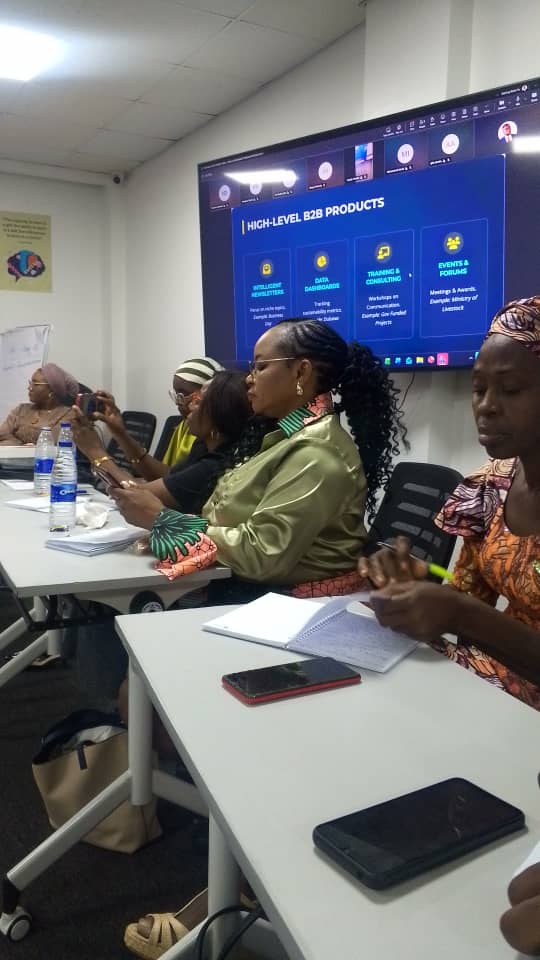
This was advice given by the Sterling Sustainability Working Group (SWG), a Sterling Holding Company of the Sterling Bank at a two-day workshop for journalists in Abuja.
The event which was part of activities marking the “2025 National Sustainability Week” was jointly organised by SWG, Climate Africa Media Initiative and Centre (CAMIC) and Nature News.
The theme of the workshop was “Storytelling for Good: Reporting Sustainability, Innovation and Nigeria’s Future.”
The chairman of SWG, Mrs. Bunmi Ajiboye welcomed the guests, stressing that the group was training journalists as a way of helping them to survive harah economic times and stepping up development in the country.
“We believe that this goes beyond training and becomes a cornerstone of how Nigeria tells its story of progress, resilience, and innovation,” were her words.
She noted, “You see, the story is only as true as the person who told it.
”In order words, it is how the story is told that it is believed, retold, resonate, and then begin to shape culture, behaviour, practices, and society.
“The story is what shapes the nation. What good is a breakthrough if no one hears it?
”What good is innovation if it isn’t translated into understanding?
”What good is national progress if it isn’t communicated in a way that inspires others.
”You, our storytellers, editors, producers, journalists, broadcasters, and digital creators carry the responsibility of shaping how Nigerians interpret sustainability, how policymakers understand urgency, how citizens see opportunities and how our continent perceives its future.”
A former Managing Director of Media Trust Ltd., Alhaji Ishaq Ajibola who dwelt on Media Sustainability identified the diverse ways media owners can stay afloat in the fast changing and difficult world.
According to him, media companies that depend on old ways of raising revenue like advertisement would perish.
He said embracing cost control measures, production of quality and independent contents, corporate governance, audience engagement, and right technology will help.
Similarly, an editor with ICIR, Miss Victoria Bamas who spoke on “AI for Content Optimisation and Distribution” maintained that AI is important in the media work because it enhances speed and efficiency.
She urged journalists to explore it in their work.
The publisher of NatureNews, Mr Aliu Akoshile who spoke on “Media Ethics and AI Risks” warned that journalism must regulate itself.
He urged journalists to scale up their ethical competence to be able to withstand the storm in the media industry.
A Mass Communication lecturer in the University of Abuja, Dr Jemila Dahiru tasked journalists to move away from merely reporting press statements and calamities to Developmental Journalism.
Participants who spoke at the end of the event praised organisers and facilitators for their work, saying they were better informed on how to do their work.
The organisers promised to track the impact of the training for its sustenance.