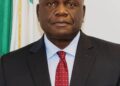





Nigeria’s gross external reserve has risen to about $51.04 billion, the Governor of the Central Bank of Nigeria, Olayemi Cardoso has said.
The reserve position is at the highest level in over a decade and a half, as Dr. Cardoso, said strategic reforms introduced by the CBN have also restored investor confidence and strengthened the country’s external position.


Speaking at the 14th annual BusinessDay CEO Forum yesterday in Lagos, the CBN Governor said the country had moved from a period of severe economic uncertainty to one of growing stability.
He attributed the turnaround to disciplined monetary reforms, improved policy credibility and efforts to diversify foreign exchange inflows.
“Nigeria’s foreign reserves climbed to $52 billion, the highest level in years. It was once down to $3 billion. We owed $7 billion. Panic set in. People looked for ways to externalise anything and run away. Zero confidence. It was a very bad situation. Many people had lost hope,” he said.
Cardoso noted that although many blamed him for the challenges facing the economy but i wasn’t the cause.
“People pointed fingers at me but I was not the cause. I came to solve the problem. I had to roll my sleeves and attack it with everything I could. You can’t be lily-livered. You can’t be Mr Nice Guy to save it. You need discipline. You need integrity and trust. Once trust is lost, you’re headed in the wrong direction. To rebuild the trust, you have to be courageous to do the right thing,” he stated.
According to him, international remittances have become one of the key pillars supporting reserve growth.
“When we were building the reserves there was a lot of cynicism. I said we needed to diversify our reserves and we went into remittance inflows, gave ourselves a target and pursued it,” he said.
Cardoso revealed that monthly diaspora remittances through official channels currently stand at about $600 million, with the CBN targeting $1 billion per month by the end of the year.
He also dismissed misconceptions about the use of Nigeria’s foreign reserves, stressing that the funds were not meant for routine government spending.
“There’s a misconception about how much we have and how it’s deployed. It’s not for day-to-day operations. It’s used for interventions where necessary and we are determined to grow it to a greater margin,” he explained.
According to him, the current reserve level provides about 10 months of import cover, a key indicator closely monitored by international investors and credit institutions.
“It gives internal stakeholders confidence as well,” he added.
On inflation, the CBN governor said Nigeria had recorded 11 consecutive months of disinflation before fresh global tensions disrupted the downward trend.
He attributed the temporary setback to external developments, particularly the conflict involving the United States and Iran, stressing that Nigeria was better positioned to absorb the shock because reforms had been implemented ahead of time.
“There were unpredictable external shocks like the US-Iran war. It affected everyone but affected us less because we undertook the reforms a lot earlier,” he said.
Cardoso expressed optimism that inflation would moderate further next year, adding that the Monetary Policy Committee (MPC) would continue to rely on economic data in determining the appropriate policy direction.
“We projected that by next year, inflation will get to moderate levels. We have independent-minded MPC members who rely strictly on data. All actions are guided by that,” he said.
The CBN governor also disclosed that the apex bank deliberately diversified the country’s sources of foreign exchange while rebuilding external reserves.