



By ZAKAA LAZARUS
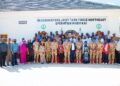
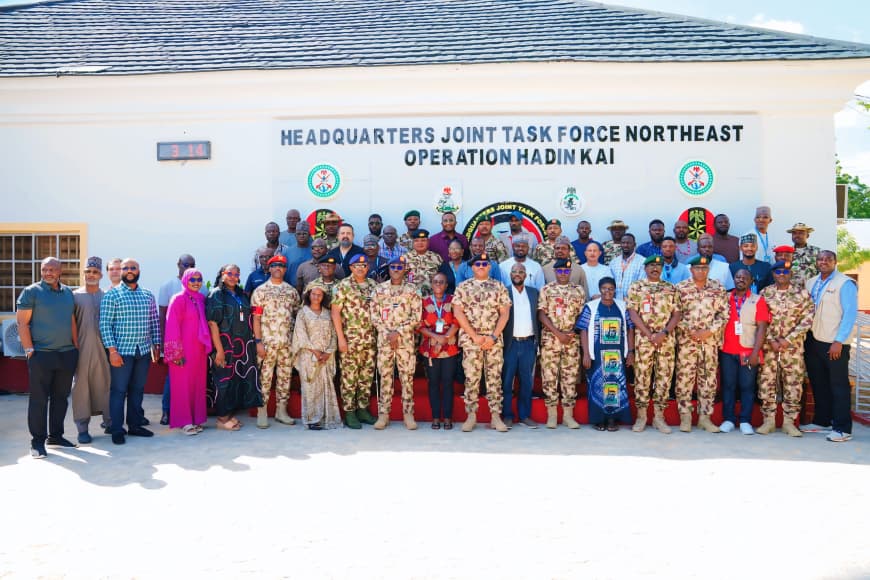
The Headquarters Joint Task Force, North East, Operation HADIN KAI, OPHK, in partnership with the United Nations Office for the Coordination of Humanitarian Affairs, UN OCHA, has hosted a Humanitarian/Civil-Military Coordination Roundtable to strengthen protection of civilians and delivery of aid in the North East.

This was disclosed in a statement signed by Captain Mohammed Goni, Acting Military Information Officer, Headquarters OPHK, on Thursday, 13 August 2026 in Maiduguri.
The forum was designed to foster more efficient delivery of humanitarian assistance to vulnerable communities affected by armed conflict across Borno, Adamawa and Yobe States.
It brought together representatives of humanitarian agencies, the Borno State Government, and other stakeholders at the OPHK Headquarters Conference Room. The Roundtable was co-chaired by the Theatre Commander OPHK, Major General AE Abubakar, and the Deputy Head of Office UN OCHA North East Nigeria, Patricia Mucheche.
Participants received briefings on OPHK’s humanitarian activities and stabilisation efforts. Discussions focused on improving coordination, facilitating humanitarian access, and supporting more effective assistance to conflict-affected communities.
In his keynote address, Major General Abubakar described the engagement as timely, noting it was the first Humanitarian Roundtable in four years and aligned with the Chief of Army Staff’s directive to reinforce the Armed Forces’ commitment to humanitarian support.
He stressed that while kinetic operations remain essential to degrading terrorist groups, the Humanitarian Line of Effort is equally indispensable. He identified priority areas including securing major humanitarian supply routes, protecting civilians and relocated IDPs, safeguarding farmers, addressing misconducts, and tackling challenges such as IED threats, cash movement, access constraints, and funding limitations.
The Chief of Army Staff, Lieutenant General Waidi Shaibu, reaffirmed the Nigerian Army’s commitment to providing security for the safe movement of humanitarian personnel and relief materials, especially along key operational corridors. He called for innovative force protection measures and stronger coordination between the military and humanitarian organisations.
In her remarks, Ms. Mucheche of UN OCHA acknowledged the military’s role in enabling safe delivery of aid. She called for enhanced patrols along supply routes and drew attention to threats posed by Unexploded Ordnance. She stressed that protection of civilians remains central to the humanitarian response.
In his closing remarks, the Deputy Theatre Commander, Air Vice Marshal OF Akinboyewa, thanked participants for the frank engagement. He reaffirmed OPHK’s commitment to securing critical routes and population centres, protecting civilian livelihoods, and maintaining a predictable coordination framework with humanitarian partners.
He assured that recommendations from the roundtable would be followed through as the collective aspiration shifts from emergency assistance to recovery, resilience, and sustainable development.