



By ZAKAA LAZARUS
The Chief of Army Staff (COAS), Lieutenant General Waidi Shaibu, has called for strengthened Nigeria–Rwanda defence cooperation in Improvised Explosive Devices (IEDs) threat mitigation and victim care, Counterterrorism and Counterinsurgency (CTCOIN), and professional military capacity development.

This was disclosed in a statement issued on 21st October, 2026, by the Acting Director, Army Public Relations, Colonel Appolonia Anele.
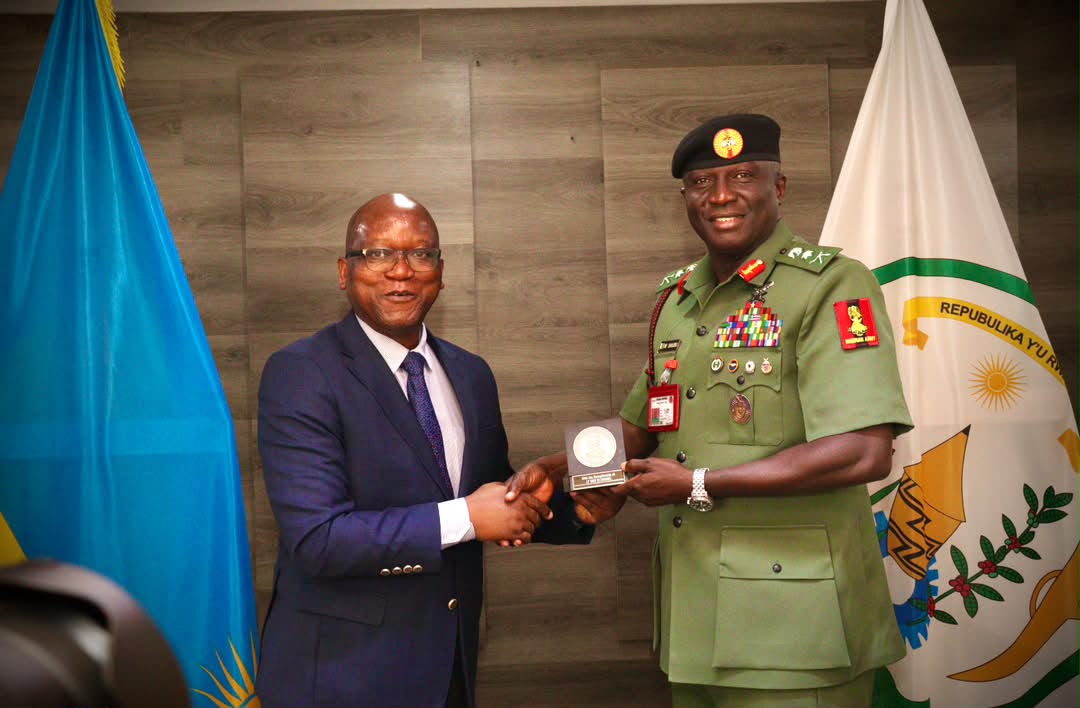
General Shaibu made the call during a meeting with Rwanda’s Minister of Defence, Minister Juvenal Marizamunda, in Kigali on Wednesday, 21st October, 2026, emphasising the strategic importance of shared expertise and specialised training in confronting evolving security threats and advancing regional stability.
Lieutenant General Shaibu expressed appreciation to the Minister for approving his official working visit and pledged sustained efforts to deepen bilateral defence cooperation.
He commended the professionalism, discipline and training standards observed during his engagements with Rwanda’s military institutions, particularly the Rwanda Military Academy at Gako.
He urged both countries to explore expanded cooperation in IED detection, countermeasures and the care of victims, while leveraging their respective CTCOIN experiences to improve operational preparedness, protect civilians and strengthen the capacity of their armed forces to respond to asymmetric threats.
In his remarks, Minister Juvenal Marizamunda appreciated the Nigerian Army’s contribution to strengthening existing defence relations, particularly through professional exchanges spanning officer-cadet training to strategic-level military education.
He acknowledged Nigeria’s deployment of two directing staff to support the development of the National Defence College–Rwanda and encouraged deeper collaboration in counterinsurgency and peace support operations.
He emphasised the need for both countries to leverage their operational experiences for mutual benefit and wider international security, particularly across Africa, noting that sustained defence partnerships, specialised training and knowledge-sharing are vital to building resilient armed forces and advancing lasting regional and international peace.