




By Ademola Bakare
The Nigeria economy since 2023 when President Bola Tinubu assumed office has been characterised by significant structural reforms – notable is the petroleum subsidy removal and foreign exchange unification. Birthing a sluggish, and painful transition towards stability.
The International Monetary Fund (IMF) and the World Bank had described the Nigerian economy to be in a critical transition phase, moving from a period of “limited reforms and muted growth” towards a “bold, necessary, but painful” market-oriented restructuring.
Ever since, the Bretton Woods institutions have generously applauded the Tinubu administration’s audacity for the removal of fuel subsidies and unification of the foreign exchange (FX) market, which hitherto was chaotic and opaque. These actions, expectedly, worsened the cost-of-living crisis for Nigerians, particularly the poor. But recently President Tinubu declared the economy out of the woods.
Specifically, he said the Nigeria’s economy has transitioned from a period of ‘stabilization to acceleration’. This, he has spoken at many fora, locally and abroad, where he had expressed confidence that his bold but painful reforms are now fruitfully bearing dividends.
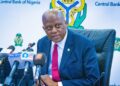
This underscores the monetary policy reforms undertaken by the governor, Central Bank of Nigeria, CBN, Olayemi Cardoso since 2023. For his conservative orthodox central banking, he has repositioned the Nigeria financial landscape, making it a one-stop investment destination. But for space constraint his achievements already in public domain would have been shared here.
However, the focus here is on the outcome of the just concluded 304th stanza of Central Bank of Nigeria’s Monetary Policy Committee {MPC} meeting, the implications of the decisions taken on the economy, its consequences across national development, and mandate alignment.
The Committee reduced the monetary policy rate {MPR} by 50 basis points to 26.5 per cent from 27.0, aimed to support economic expansion while maintaining price and financial stability. Retained cash reserve ratio {CRR} at 45 percent for commercial banks and 16 percent for merchant bank; retained liquidity ratio {LR} at 30 per cent, and fixed Standing Facilities Corridor at +50/-450 basis points around the MPR.
These outcomes reflect CBN’s cautious but measured approach to monetary easing, considering inflation deceleration for the eleventh consecutive time, and improved macroeconomic pointers. Headline inflation dropped to 15.10 per cent in January 2026.
The decision received mixed reactions. The outcome was widely applauded as a positive signal by investors and the organized business community, who believed the ease will improve investor sentiment, and will gradually ease financing conditions of members, while some felt the outcome fell short of expectation.
Members of the Organised Private Sector {OPS} welcomed the 50-basis-point reduction as a cautious development set to signal a gradual shift toward supporting growth. Dr. Muda Lawal, Executive Director, Centre for the Promotion of Private Enterprise, commended the CBN for transitioning from aggressive tightening to a more balanced approach, viewing it as a “cautious optimism” signal for the economy.
Mrs. Elizabeth Bamidele, C.E.O Elimco Investment Ltd., sees the reduction in MPR as a necessary move to stimulate growth, support investment, and lower the high cost of borrowing for businesses.
While applauding the gesture, Mr. Olubayo Agbi, chattered accountant at Agbi & Partners, said the cut has been what the private sector had been clamouring for. He said lower interest rate alone is not good enough. He urged the CBN and government to focus on tackling the root causes of inflation, specifically rising energy costs, transportation bottlenecks, insecurity and banditry, and food supply issues.
The outcome is refreshingly positive to investors and the businesses, capable of improving investor sentiment and gradual easing of financing conditions of operators.
Some market operators received the rate cut news only as a cautious step by the CBN towards monetary easing, and balancing growth support with price stability. While few operators see the marginal rate cut as insufficient to significantly impact the economy. In fact, they expected a more aggressive cut.
The 50-basis point reduction is expected to support economic growth by making credit available and more accessible to businesses, particularly to the real sector, which include manufacturing, agriculture, and small and medium enterprises (SMEs). The high cash reserve ratio (CRR) at 45 percent for commercial banks may however hamper the effectiveness of this action, as it will ultimately restrict the amount of money available for lending.
The CBN’s tight monetary position has no doubt been hugely effective in curbing inflation. The measure was so potent to have decelerated inflation for 11 consecutive months, berthing at 15.1 per cent in January 2026.
The eased MPR is generally believed to be a shift by the CBN towards a more accommodative monetary policy stance. Responding to this perception, the CBN governor said the measure was an expression of commitment to ensuring price stability. He pledged that the CBN will remain vigilant and cautious as it watches over the economy.
Olayemi Cardoso restated CBN’s conservative posture under his watch, recommitting to strict orthodox central banking, and operating within its mandate. The CBN policy reforms became a reference template for other jurisdictions desirous of a virile and strong economy. World’s financial institutions and some globally reputed rating agencies rallied with the Bank in its onerous task of ensuring financial stability, transparency, and accountability in the nation’s financial ecosystem.
As of the month of February 2026, the governor confirmed 20 banks that have completed recapitalization, while 13 almost rounded up with their minimum capital requirement benchmark. Hopefully, he assured, they will beat the deadline.
The CBN’s volte-face from hitherto quasi-fiscal intervention policies to stay focused on its mandate is well aligned with the promotion of economic growth, and price stability. The foremost bank seems positioned in solidarity with President Tinubu’s $1 trillion economy ambition by 2030. The support, no doubt, is anchored on a strong, strategic, and robust banking institution equipped for the huge volume of transactions befitting of such an economy.
Nevertheless, some economic agents have argued that the CBN can do more to support the real sector, and address structural challenges than it is currently doing. Cardoso concurred, and acknowledged that, “all of our monetary measures were tough, but have begun to pay off. Part of it is the monetary policy tightening, and if sustained, particularly in the foreign exchange market, we are definitely going to see a decrease in food inflation. The fiscal authority is also doing everything possible to balance things out to continue the disinflation pathway”.
Most important, Cardoso echoed, “all stakeholders just have to be disciplined to ensure that those gains achieved are sustained”, he admonished.
Ademola Bakare, a financial analyst writes from Abuja