




By Ademola Bakare
The Nigeria banking sector has witnessed significant recapitalization and consolidation exercises, dating back to 1952. The most recent were in 2004, that terminated in 2006, and 2010. Professor Charles Soludo, then governor of the Central Bank of Nigeria, raised minimum capital benchmark from N2 billion to N5 billion. The effort reduced the number of banks in Nigeria to 25 from 89, and Mallam Sanusi Lamido Sanusi, also a former governor, in 2010 established Asset Management Company {AMCON}, “bad bank” to ‘buy toxic assets off commercial banks, and recapitalized distressed financial institutions.


That era was largely an abuse of banking industry ethics, hugely perpetrated internally by chief executives, and board members of many banks.
The Central Bank of Nigeria’s {CBN} just concluded effort was announced in 2024 with a two-year timeline, prescribing a new recapitalization regime of minimum capital benchmark of N500 billion, N200 billion, and N50 billion for commercial banks with international, national, regional licences respectively.
The new capital targets were ₦500 billion for international commercial banks, ₦200 billion for national commercial banks, ₦50 billion for regional commercial banks, ₦50 billion for national merchant banks, ₦20 billion for national non-interest banks, and ₦10 billion for regional non-interest banks
Recapitalization of banks in Nigeria is not novel, it has always been a regulatory measure employed by the Central Bank of Nigeria (CBN) to strengthen the financial system, protect depositor funds, and enhance the banking sector’s capacity to support economic growth. The first exercise was carried out in 1952 (Banking Ordinance), caused by the failure of indigenous banks. The then colonial government adopted tight regulations, raising the capital requirement for foreign banks to £400,000. The Banking Act of 1969, was another effort to strengthen banks. It raised the capital base to £1.5 million for foreign banks and £600,000 for indigenous commercial banks.
In 1997/1998 (Bank Failures) following widespread distress and failures within the sector, minimum benchmark capital was once again raised, which ultimately led to the failure of 26 banks.
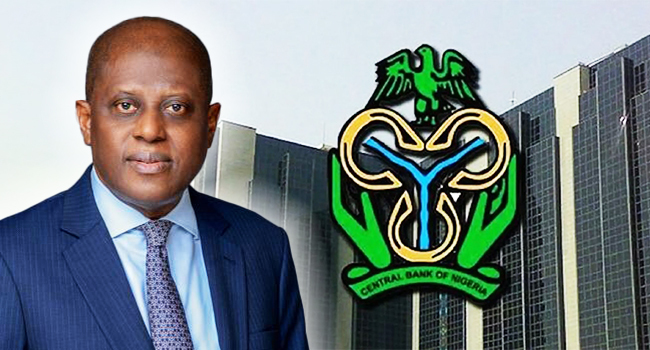
The Olayemi Cardoso recapitalization programme which started on April 1, 2024 was considered a herculean odyssey deadline for the banks to bolster their capital bases. But the governor has been consistent and uncompromising with his policies. He said “the era of fragile balance sheet was over”. He wasn’t just desirous of bigger and fat figures on a ledger, he was seeking a financial ecosystem capable of financing huge infrastructure, and a $1 trillion economy envisioned by President Bola Tinubu’s administration, as well as structuring the sector to be able to withstand any shock associated with the volatile global economy.
As of March 31, 2026, 33 banks have met the new requirements, raising ₦4.65 trillion in new capital. These efforts aimed to strengthen Nigeria’s banking sector, improve resilience, and support economic growth. The programme was executed seamlessly, devoid of any rancour, and recorded a very strong participation from domestic and international investors, with 72.55 per cent of capital sourced locally and 27.45 percent from international markets. This demonstrated growing and sustained confidence in the Nigerian banking sector, and by extension, the Nigerian economy.
The concluded programme offers several implications and benefits for the Nigerian economy. Among which, but not limited are – increased lending capacity. With stronger capital bases, banks can lend more to businesses, particularly the small and medium enterprises (SMEs), and individuals yearning for capital to expand their businesses. Surely, this will strengthen financial stability as higher capital requirements will reduce the likelihood of bank distress and contagion, thereby promoting financial system stability.
For the $1 trillion economic aspiration of the government, a well-capitalized banks will attract more foreign investors to support the Nigeria economic development, making it competitive. Larger banks they are now, not a pack of local lenders, equipped, and can compete effectively with international banks, fostering innovation, and efficiency.
Among other benefits is economic stimulation, to ensure increased lending supports for infrastructure development, industrialization, and job creation. With stronger shareholder net worth, banks performance will improve and the shareholders’ confidence boosted.
CBN strong regulatory framework employed by Olayemi Cardoso ensured that banks adopt more robust risk management practices, thereby reducing the risk of financial crises. The apex bank, has he often said will continue to improve on governance, transparency, and accountability in the banking industry.
The recapitalization program when it was wrapped up earned hugely commendation from industry players, and financial technocrats, who viewed the program as the prescription the economy required for its transformation.
However, not all banks operating in the country met the deadline. Some couldn’t, and are still continuing with the process of shoring up their capital adequacy. To these banks, the CBN assured the banking public, will remain functional.
Cardoso said, “Sustainable economic growth is unattainable without a resilient financial system. This recapitalisation ensures Nigerian banks can fund the scale of transactions needed to drive a $1 trillion economy”. Stressing that “the recapitalisation programme has strengthened the capital base of Nigerian banks, reinforced the resilience of the financial system and ensured it is well-positioned to support economic growth and withstand domestic and external shocks”.
The Olayemi Cardoso era will be etched in annals of banking sector history not for complexity of his monetary policies, but for clarity of his vision for the sector and the country.
Ademola Bakare, writes from Abuja.