



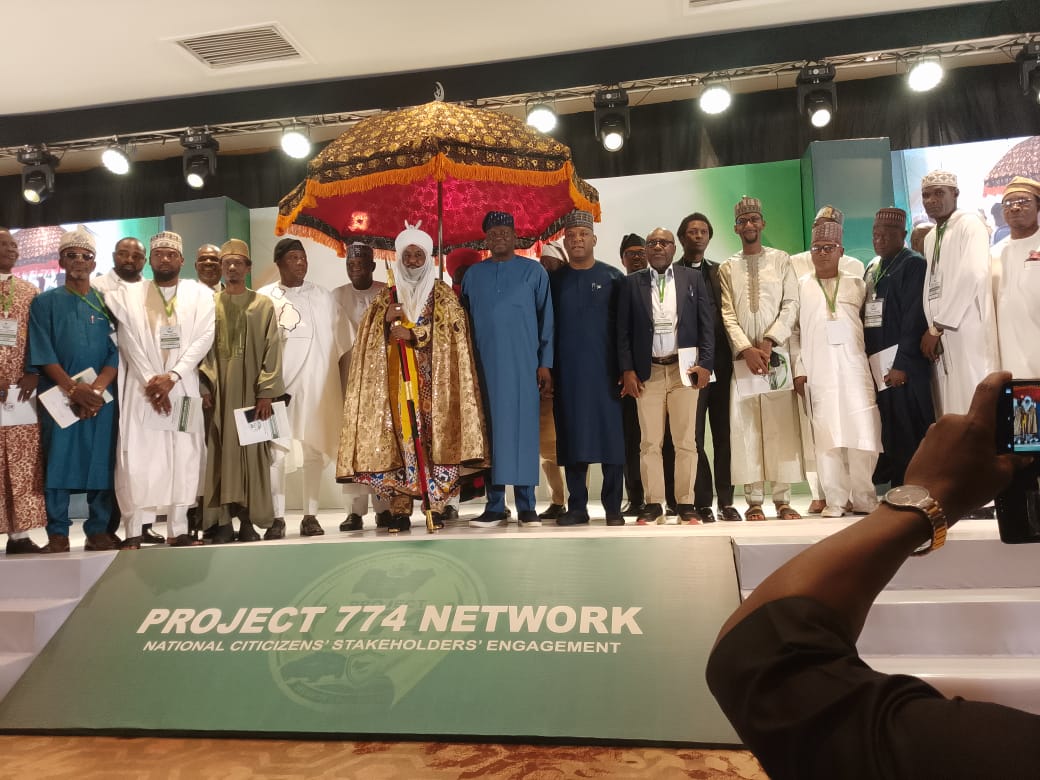

Prominent government officials, traditional rulers, religious leaders, security stakeholders, and citizens have called for renewed patriotism, collective responsibility, and national unity as essential ingredients for tackling insecurity and advancing sustainable peace and development in Nigeria.
The call was made during the Project 774 Network National Citizens’ Stakeholders Engagement themed “Supporting Our Troops, Strengthening National Unity and Advancing Peace and Development.” The engagement brought together key stakeholders to deliberate on practical solutions to Nigeria’s security challenges while fostering greater collaboration between citizens and security institutions.


Declaring the event open, the Chief Convener of Project 774 Network, Alhaji Mohammed Ibrahim, said the initiative was conceived in response to the growing security challenges confronting the nation. He noted that many citizens have become passive observers instead of taking proactive steps toward promoting peace and supporting national security efforts. He thanked participants for honoring the invitation and reaffirmed the Network’s commitment to mobilizing citizens for nation-building.
Representing the Speaker of the House of Representatives, the guest speaker urged Nigerians to cultivate a culture of patriotism by speaking positively about the country. He emphasized that the words citizens speak about Nigeria influence the nation’s future and encouraged Nigerians to believe in their country and pray for their leaders.
He stressed that national leadership demands a national outlook rather than ethnic, religious, or regional interests, adding that every public office holder has a responsibility to serve all Nigerians equally.
Reflecting on his personal experience during the Maitatsine crisis, he recalled how Christians and Muslims protected one another irrespective of religious differences, demonstrating that security is a shared responsibility. He emphasized that peace and security remain the foundation for economic growth, investment, and national prosperity.
He further highlighted the Federal Government’s ongoing efforts to strengthen Nigeria’s security architecture, including the proposed establishment of State Police, while calling on religious leaders, traditional institutions, community leaders, and citizens to support constitutional reforms that will bring security closer to local communities.
The representative also outlined key infrastructure projects of the Federal Government, including the development of deep seaports, the Lagos-Calabar Coastal Highway, and expanded rail networks aimed at stimulating economic growth, creating jobs, and promoting shared prosperity across the country.
Delivering a goodwill message, the Chairman of the Occasion, His Royal Highness Muhammadu Sanusi II, Emir of Kano, expressed deep concern over the nation’s worsening insecurity. He lamented that security challenges are often viewed through ethnic and regional lenses, resulting in selective concern depending on where attacks occur.
The Emir warned against the growing menace of drug abuse, describing it as a major driver of criminality and violent crimes across the country. He called for decisive action against illicit drug trafficking and questioned how large quantities of illegal drugs continue to move across the country without interception. He urged security agencies and relevant authorities to intensify efforts to dismantle criminal networks responsible for drug distribution.
In his keynote address, Professor Sunday Batur Lugard challenged Nigerians to become more responsive to security issues affecting their communities. He observed that insecurity has increasingly become commercialized at the expense of innocent citizens and called for deliberate, coordinated, and sustained actions to address the crisis.
Professor Lugard further advocated for the investigation and prosecution of influential individuals found to be sponsoring or benefiting from insecurity, stressing that accountability remains essential to restoring public confidence and achieving lasting peace.
The engagement concluded with a renewed call for stronger collaboration among government institutions, traditional rulers, religious leaders, civil society organizations, the private sector, and citizens in supporting Nigeria’s security agencies and promoting national unity.
Participants reaffirmed that peace, security, and sustainable development can only be achieved through collective responsibility, patriotism, and unwavering support for the nation’s security architecture.