



The West Africa Broadcast and Media Academy (WABMA) has told aspiring media practitioners to look beyond conventional employment and harness their professional skills to create business opportunities, build sustainable careers and contribute to the growth of the media industry.
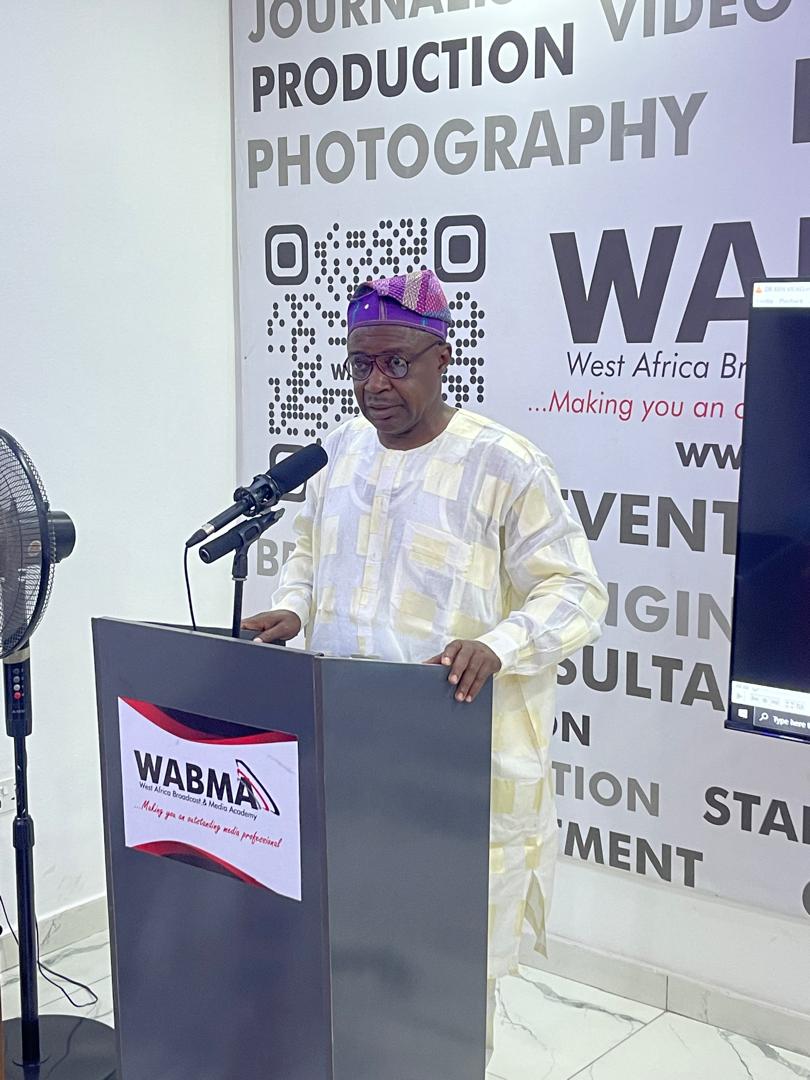
The challenge was delivered during the induction of participants for the Academy’s fourth-quarter training programme, where the Rector, Dr Ken Ike Okere, described WABMA as a meeting point for aspiring media professionals across West Africa, particularly Nigeria, Liberia and Ghana, a statement signed by Mike Yawe, the Executive Director, Business Development, West Africa Broadcast and Media Academy (WABMA) said.


Dr Okere reaffirmed the Academy’s mandate to train media professionals capable of meeting the demands of a rapidly evolving industry. He urged the inductees to uphold the ethics of their respective professions and become worthy ambassadors of WABMA upon graduation.
He noted that artificial intelligence and digital platforms were rapidly transforming the media landscape, with digital technologies increasingly challenging the traditional gatekeeping role of conventional media organisations.
However, he cautioned that access to technology alone does not confer professionalism, stressing the importance of continuous learning, ethical conduct and the practical application of acquired knowledge. He encouraged the participants to share their knowledge with others, noting that teaching others also strengthens one’s own learning.
In her welcome address, the Registrar of the Academy, Mrs Chidiebere Njoku, urged the participants to take the five-week training programme seriously and build meaningful professional relationships with fellow inductees.
She described the Academy’s facilitators as among the best in the industry and encouraged the students to engage them actively, ask questions and take full advantage of their wealth of knowledge, expertise and practical experience.
Mrs Njoku also highlighted WABMA’s flexible learning options, explaining that its campuses in Abuja, Enugu and Lagos offer online, in-person and hybrid training. She urged the participants to take advantage of the Academy’s facilities and learning opportunities to maximise their professional development.
TURNING MEDIA SKILLS INTO BUSINESS OPPORTUNITIES
A major highlight of the induction was a presentation by the Executive Director, Business Development, Mike Yawe, titled “Turning Media Skills into Business Opportunities, Professional Excellence and Career Success.”
Yawe challenged the inductees to recognise that professional success in today’s media industry requires more than academic qualifications or years of experience.
“At WABMA, we believe that talent may open the door, but competence, continuous learning and professional excellence keep it open,” he said.
He explained that WABMA’s approach goes beyond conventional classroom instruction, positioning the Academy as a finishing school for media practitioners through practical, industry-focused training designed to refine existing skills, expand professional horizons and prepare participants for emerging opportunities.
According to him, the media industry offers significant opportunities beyond traditional employment, with competencies in journalism, broadcasting, digital marketing, content creation, public relations, graphics design, video production and strategic communication providing a foundation for entrepreneurship, consultancy and independent media ventures.
Yawe urged the inductees to see themselves not only as job seekers but also as potential employers, entrepreneurs, consultants and innovators capable of creating value within the industry.
He emphasised that professional training must translate into tangible results, encouraging participants to identify opportunities, develop innovative solutions and build careers that respond to the changing needs of society and the marketplace.
INTERNSHIP AND INDUSTRY PARTNERSHIPS
The Executive Director further explained that WABMA’s commitment to its students extends beyond the completion of their training.
Through its internship programme with partner media organisations, graduates have opportunities to gain practical industry experience and demonstrate their competence. Those who perform creditably stand a chance of securing employment with the participating organisations.
Yawe also highlighted the Academy’s corporate training portfolio, which includes engagements involving organisations such as the United States Consulate in Lagos, the Ford Foundation, the Economic and Financial Crimes Commission (EFCC), the Raw Materials Research and Development Council (RMRDC) and Media Trust Group, among others.
He challenged the inductees to look beyond the certificates they would receive at the end of their training and reflect on four critical questions:
What new skills would they acquire? What business opportunities could they identify?
What professional relationships could they build?
How could they use their training to advance their careers or create opportunities for others?
LIBERIAN AND GHANAIAN STUDENTS SHARE THEIR EXPERIENCES
The occasion also provided an opportunity for the international participants to share their experiences of learning and living in Nigeria.
Students from Liberia and Ghana described the learning environment as conducive and the atmosphere as suitable for effective learning. Their accounts highlighted the Academy’s growing appeal as a destination for professional media training across West Africa.
The event concluded on a lively note as facilitators and inductees took to the dance floor during the WABMA social media moment, creating an atmosphere of camaraderie, networking and celebration.
The memorable gathering underscored the Academy’s commitment to combining professional development with collaboration and meaningful relationships among media practitioners from different backgrounds.
As the five-week training programme begins, 87 students were inducted across the three Campuses and WABMA has reaffirmed its determination to equip media professionals with the practical skills, ethical grounding and entrepreneurial mindset required to thrive in an increasingly competitive and technology-driven industry.