

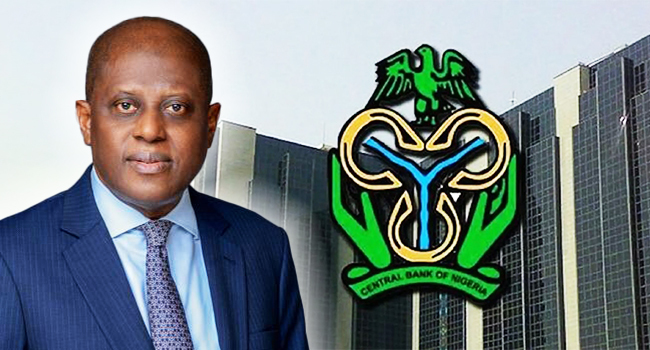

The Monetary Policy Committee (MPC) of the Central Bank of Nigeria (CBN) held its 307th meeting on September 21 and 22, 2026.
The Committee examined recent trends in the global and domestic economic environment, considered emerging risks to the outlook, and evaluated their potential implications for monetary policy.


Eleven (11) members of the Committee were in attendance. Decisions of the MPC The Committee decided as follows: 1. 2. 3. Reset the Monetary Policy Rate at 23 per cent. Recalibrate the Standing Facilities Corridor to +50/-300 basis points around the MPR.
Retain the Cash Reserve Requirement (CRR) for Deposit Money Banks at 45.00 per cent, Merchant Banks at 16.00 per cent, and non-TSA public sector deposits at 75.00 per cent.
The Committee decided to reset the MPR and recalibrate the policy corridor as an important operational realignment aimed at strengthening monetary policy transmission and reinforcing the primacy of the monetary policy rate.
The MPC emphasized that the recalibration of the corridor does not constitute a change in the current monetary policy stance, but rather an operational reset to enhance the effectiveness of monetary policy and support the transition to an inflation targeting framework. Members are of the view that the current macroeconomic environment remains supportive of such a recalibration without undermining the disinflation process.
Considerations
Central Bank of Nigeria In arriving at its decision, the Committee noted that the observed divergence between the MPR and the prevailing market rates had weakened the effectiveness of monetary policy transmission. Members noted that the Bank’s ongoing repair of the monetary policy implementation framework, including the adoption of NOFR as a transaction-based operational benchmark, has improved the transparency of money market operations. The Committee therefore considered a reset of the MPR and recalibration of the corridor appropriate to better align the monetary policy implementation framework with market realities.
This would strengthen policy transmission and restore the MPR as the principal signal of monetary policy. Members emphasized that the recalibration represents an operational realignment of the framework and should not, in itself, be construed as a change in the underlying policy stance.
The MPC broadly observed the increasing resilience demonstrated by the Nigerian economy, reflected by the moderating inflation, robust external reserve buffers, improved external sector fundamentals and strengthening investor confidence.
The Committee acknowledged the considerable improvement in the balance of payment surplus of US$3.51 billion in Q2 2026, compared with US$2.38 billion in Q1 2026. Similarly, the current account surplus increased by 67.92 per cent to US$7.54 billion in Q2 2026, from US$4.49 billion in Q1 2026.
The Committee particularly noted with satisfaction the progress of the disinflation process, evidenced by three consecutive months of decline in headline inflation despite the lingering geopolitical tensions in the Middle East and the associated increase in global energy prices. Members observed that the moderation in inflation indicated the effectiveness of previous policy tightening measures, sustained exchange rate stability, and improved inflation expectations.
In addition, the MPC welcomed the Presidential Initiative on National Affordable CNG Transit Programme which is expected to lower transportation costs and support the continued decline in inflationary pressures.
Furthermore, the MPC acknowledged the renewed commitment to policy coordination following the signing of the Memorandum of Understanding on fiscal-monetary coordination between the Federal Government of Nigeria (represented by the Federal Ministry of Finance).
This development, amongst others, would provide a structured framework to strengthen policy harmonisation towards the achievement of low and stable inflation. Members noted the strengthening of the banking industry, following the successful recapitalisation programme, which has enhanced banks’ capital buffers, resilience and capacity to finance long-term projects in critical sectors of the economy.
In the Committee’s assessment, these positive macroeconomic developments, taken together, reaffirmed the appropriateness of the timing and created sufficient headroom for the reset of the policy rate corridor. Price and Other Domestic Developments Headline inflation (year-on-year) slowed to 15.39 per cent in August 2026 from 15.43 per cent in the preceding month, driven by both the food and core measures.
Food inflation declined to 19.57 per cent in August 2026 from 20.31 per cent in July 2026, largely reflecting moderation in prices of palm oil, vegetables and meat amongst others. Similarly, core inflation moderated to 13.29 per cent in August 2026 from 14.97 per cent in July 2026, driven by lower cost of transport and health care services.
The 12-month moving average headline inflation rate continued its decline to 16.30 per cent in August 2026 from 16.89 per cent in July 2026, marking twenty (20) consecutive months of moderation, an indication of sustained easing in the underlying price pressures.
On a month-on-month basis, headline inflation slowed to 0.71 per cent in August 2026 from 1.57 per cent, driven mainly by the moderation in food inflation. Real GDP grew by 4.43 per cent in the second quarter of 2026, from 3.89 per cent in the preceding quarter, reflecting improved performance in both the non-oil and oil sectors.
The non-oil sector expanded by 4.31 per cent, compared with 3.94 per cent in the first quarter of 2026, driven largely by increased activities in information and communications technology, crop production, real estate, livestock, financial services and trade subsectors.
Similarly, growth in the oil sector accelerated by 7.31 per cent, compared with 2.57 per cent in the preceding quarter, supported by increased production and investment in the sector. The composite Purchasing Managers’ Index rose to 52.7 index points in August 2026 from 51.1 index points in July, suggesting further economic expansion.
Gross external reserves stood at US$55.25 billion on September 18, 2026, the highest in the last 18 years and sufficient to finance approximately 11.3 months of imports of goods and services. Global Developments Global growth projection remains at 3.0 per cent in 2026 compared with 3.5 per cent in 2025, reflecting the shocks from the Middle East conflict, persistent trade policy uncertainty and constrained fiscal space.
The slowdown is, however, expected to be partly offset by stronger technology-related investment.
Growth prospects remain uneven, with energy importing and low-income economies facing greater pressures from elevated energy costs and weaker fiscal buffers. Risks to global inflation remain tilted to the upside, as persistent supply chain disruptions, elevated crude oil & other commodity prices, and increasing trade fragmentation could intensify price pressures.
These pressures, combined with the possibility of renewed geopolitical tensions, could delay the normalisation of monetary policy. Outlook Domestic output growth is expected to remain resilient for the rest of 2026, supported by the continued improvement in crude oil production, expansion in agriculture and other business activities, as suggested by the Purchasing Managers’ Index.
Inflation is projected to moderate further in the short-to-medium term, underpinned by stability in the foreign exchange market, the lagged impact of earlier monetary policy tightening and expectations of improved food supply as the harvest season progresses.
Overall, the outlook for the domestic economy remains positive, although prolonged geopolitical tensions in the Middle East and election-related spendings could present upside risks to price development.
The Committee expressed its commitment to evaluating the effectiveness of the recalibrated interest rate corridor and ensure that it supports the intended objective of strengthening policy transmission.
The MPC also reaffirmed its resolve to ensure that future decisions remain data dependent towards sustaining disinflation.
The next meeting of the Committee is scheduled for Monday, 23rd and Tuesday, 24th November 2026. Thank you. Olayemi Cardoso Governor, Central Bank of Nigeria September 22, 2026.