



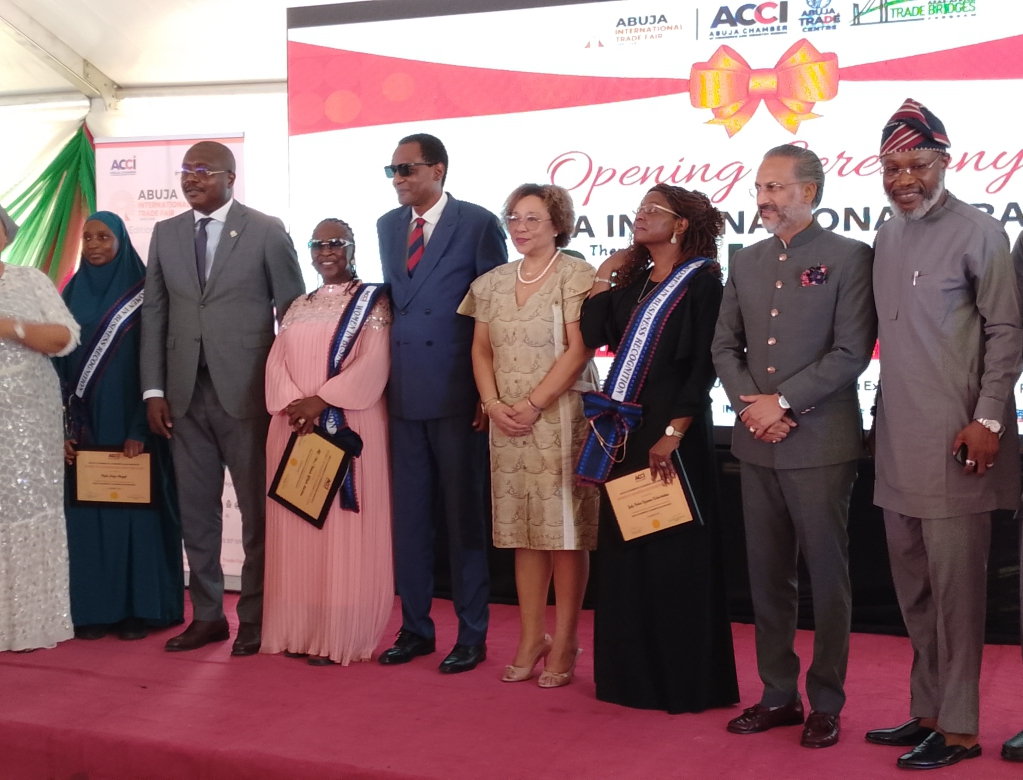

ACCI urges investment, production, innovation and expanded market access as 21st AITF begins in Abuja
ABUJA The 21st Abuja International Trade Fair (AITF 2026) has opened at the Abuja Chamber of Commerce and Industry (ACCI) Trade and Convention Centre, Musa Yar’Adua Expressway, Airport Road, Abuja, with a renewed call for stronger collaboration between government and the organised private sector to promote trade, investment, innovation, job creation and sustainable economic development.


The 21st edition of the annual trade fair has brought together businesses, investors, government institutions, diplomatic missions, development partners, trade associations, exhibitors and members of the public in a platform designed to facilitate commercial engagement, strengthen partnerships and expand market opportunities.
Speaking at the opening ceremony, the President of the Abuja Chamber of Commerce and Industry and Chairman of the 21st AITF, Chief Emeka Obegolu, SAN, PhD, said the successful organisation of the fair was the result of months of planning, consultation, coordination and engagement with key stakeholders.
He said organising a trade fair of such magnitude required the collective efforts of the leadership and staff of ACCI, government institutions, private-sector organisations, exhibitors, sponsors, partners, trade groups, security agencies and other stakeholders.
According to him, the Organising Committee undertook extensive consultations with stakeholders within and outside the business community, including the diplomatic corps, with particular attention given to creating a fair that responds to the needs of businesses while providing meaningful opportunities for trade, investment, networking and market access.
The Chairman said the committee also focused on the preparation and allocation of exhibition spaces, coordination of exhibitors, sectoral and business activities, stakeholder relations, media engagement, security and logistics.
He noted that the participation of exhibitors and partners demonstrated continued confidence in the Abuja International Trade Fair as a platform for businesses to showcase their products and services, identify customers, establish partnerships, explore investment opportunities and expand their market reach.
The 2026 edition is expected to feature more than 500 exhibitors, over 20,000 products, services and solutions, and close to 100,000 visitors throughout the 12-day event.
The programme includes business-to-business and business-to-government engagements, product exhibitions, investment networking, policy dialogue, fashion and creative displays, cultural activities and direct consumer interaction.
AITF Highlights Economic Resilience, Trade and Taxation
The keynote address at the event, delivered by the Honourable Minister of Industry, Trade and Investment, Dr. Jumoke Oduwole, focused on the importance of economic resilience, trade, taxation and the broader business environment.
The Minister commended ACCI for sustaining the Abuja International Trade Fair as an important platform for business, trade, investment and economic dialogue.
The address noted that Nigerian businesses continue to operate in a challenging environment characterised by changing market conditions, rising operating costs, evolving tax obligations, technological disruption and increasing global competition.
It stressed the need for businesses to adapt, innovate, improve productivity and explore new markets, while government policies should provide an enabling environment for enterprises to survive, grow, invest and create employment.
The keynote further emphasised that business resilience should be supported by policies that encourage production, reward innovation, simplify compliance, improve access to affordable finance and strengthen the competitiveness of Nigerian enterprises.
Stakeholders Call for Improved Business Environment
The event also highlighted the importance of continued collaboration between government and the organised private sector.
Key areas identified included improved infrastructure, reduction of unnecessary market barriers, expanded access to affordable finance, simplified tax procedures and stronger support for local manufacturing and investment-oriented businesses.
The speakers noted that taxation remains important to financing public services and national development, while emphasising the need for a tax environment that is predictable, transparent, efficient and supportive of enterprise growth.
The discussions also drew attention to concerns surrounding compliance costs, administrative complexity, multiple taxation and overlapping levies.
Stakeholders maintained that a stronger and more productive economy would ultimately provide a broader and more sustainable tax base.
The opening ceremony also attracted members of the diplomatic community, including the High Commissioner of India to Nigeria, alongside representatives of Mexico and other diplomatic and international institutions.
Their participation underscored the international dimension of the Abuja International Trade Fair and the growing importance of Nigeria’s private sector in regional and global trade.
A representative of the Economic Community of West African States (ECOWAS), also spoke on regional trade and the organisation’s commitment to facilitating smoother business activities across West Africa.
He highlighted discussions around the development of a common regional currency and other initiatives aimed at facilitating cross-border trade and strengthening economic integration within the West African region.
The ECOWAS representative reaffirmed the organisation’s commitment to creating conditions that would support smoother business growth and deeper economic cooperation among member states.
The event also celebrated the contributions of women entrepreneurs to Nigeria’s economic development.
Women entrepreneurs who had demonstrated exceptional commitment, innovation and impact in their respective areas of enterprise were recognised and honoured during the event.
The recognition highlighted the important role women-owned and women-led businesses play in employment creation, innovation, household income generation and economic development.
The fair also placed significant emphasis on the role of micro, small and medium enterprises (MSMEs) in Nigeria’s economic development.
Participants highlighted the need to improve access to finance, technology, skills, infrastructure, market information and formal markets while strengthening linkages between MSMEs, larger corporations and domestic, regional and international value chains.
The African Continental Free Trade Area (AfCFTA) was identified as an important opportunity for Nigerian businesses to expand beyond the domestic market.
Businesses were encouraged to improve their production capacity, meet required standards, strengthen competitiveness and develop products capable of accessing wider African and international markets.
AITF as a Bridge to Markets and Investment
The Abuja International Trade Fair was described as more than an exhibition of products and services, but as a bridge connecting products to markets, ideas to investment and entrepreneurship to economic opportunity.
Exhibitors were encouraged to use the fair not merely to display their products, but also to build relationships, attract customers, engage investors, develop partnerships and explore new markets within Nigeria, across Africa and internationally.
International businesses, investors, customers and members of the diplomatic community were similarly encouraged to view Nigeria not only as a large consumer market, but also as a strategic destination for production, investment, innovation and regional trade.
The event underscored the importance of collective action in strengthening the Nigerian economy, with farmers, manufacturers, entrepreneurs, investors, workers, financial institutions, government and business organisations each playing important roles.
ACCI Reaffirms Commitment to Private-Sector Development
The Abuja Chamber of Commerce and Industry reaffirmed its commitment to serving as a strong voice for the business community and a dependable partner in Nigeria’s economic development.
The Chamber said it would continue to promote dialogue, facilitate business connections, support enterprise development and advocate policies that create an enabling environment for businesses to grow and prosper.
The organisers expressed appreciation to the Federal Government, relevant ministries and agencies, the leadership and administration of ACCI, sponsors, exhibitors, development partners, diplomatic missions, trade associations, government institutions, security agencies, media organisations and other stakeholders for their contributions to the success of the 21st AITF.
The 21st Abuja International Trade Fair is expected to provide businesses with opportunities to establish new connections, attract investment, access markets and develop partnerships that can contribute to increased production, employment and economic growth.
The organisers expressed optimism that the fair would generate meaningful business relationships, unlock investment opportunities, strengthen enterprises, create jobs and contribute to shared prosperity.